Pick up almost anything within arm’s reach right now — your phone, your coffee mug, the shirt you’re wearing — and there’s a good chance it crossed an ocean before it ever reached your hands. Not by plane, in most cases. Not by some dramatic last-mile delivery story either. By ship.
It’s easy to forget this. Online shopping has made the movement of goods feel instant and almost magical: click a button, and two days later a box appears at your door. But behind that click sits one of the largest, oldest, and most quietly essential systems humans have ever built — global maritime shipping.
The Ocean Is Still the Backbone of Trade
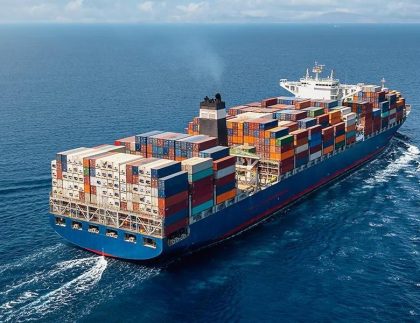
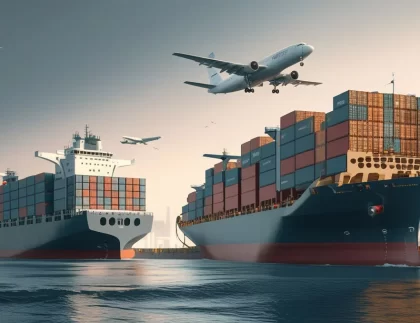
Despite decades of advances in air freight and logistics technology, roughly 80–90% of world trade by volume still moves by sea. Ships simply do something no other mode of transport can: move enormous quantities of goods over enormous distances at a fraction of the cost.
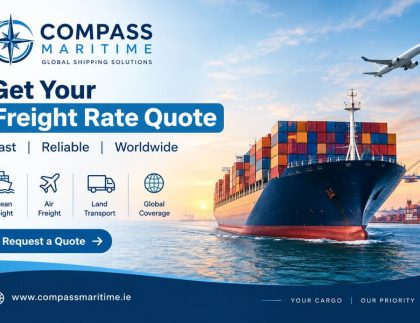
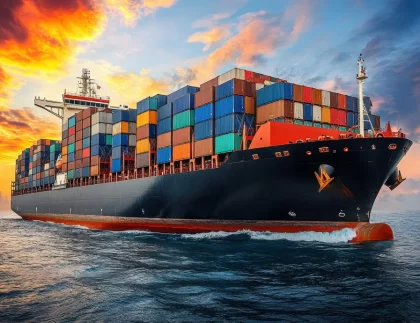
A single large container ship can carry over 20,000 containers. To put that in perspective, if you lined those containers up end to end, they’d stretch for dozens of kilometers. No fleet of planes or trucks could compete with that kind of scale — or that kind of cost efficiency. That efficiency is exactly why a T-shirt made in Bangladesh, shipped to Rotterdam, and sold in a shop in Dublin can still cost less than a coffee.
From Factory Floor to Front Door
The journey of a single product is longer and more layered than most people imagine.
It usually starts at a factory, often thousands of kilometers from where the item will eventually be used. From there, goods are packed into standardized shipping containers — the humble, unglamorous box that quietly revolutionized global trade in the 1950s by making cargo easy to move between trucks, trains, and ships without ever being unpacked.
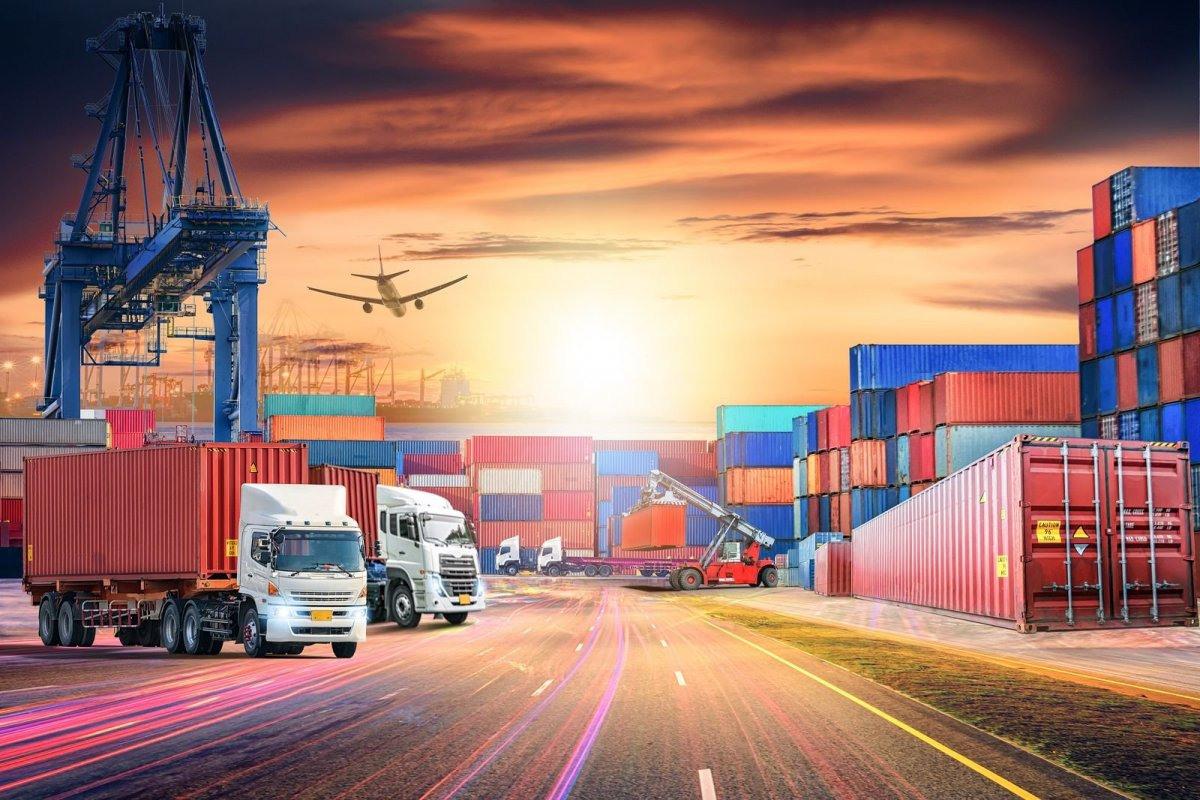
Those containers are trucked or railed to a port, loaded onto a vessel, and begin a voyage that might take anywhere from a few days to several weeks, depending on the route. Along the way, the cargo passes through a web of coordination that most people never see: customs clearance, port scheduling, freight forwarding, insurance, documentation, and tracking — all of it timed so that a delay in one part of the world doesn’t quietly cascade into empty shelves in another.
Once the ship reaches its destination port, the container is unloaded, cleared through customs, and handed off to trucks or trains for the final leg of the journey. Only then does it become the “last mile” — the part people actually see and think about.
Why Most of Us Never Think About It
There’s a reason the shipping industry is sometimes called invisible infrastructure. When it works well, nobody notices it. Shelves stay stocked, prices stay stable, and the whole system fades into the background of daily life.
It’s only when something breaks — a canal gets blocked, a port gets congested, a global event disrupts shipping lanes — that the fragility and scale of this network become visible. Suddenly, people are talking about container shortages and shipping delays on the news, and it becomes clear just how much everyday life depends on a system most of us rarely think about.
A System Built on Trust and Precision
What’s easy to miss is how much coordination this all requires. Every voyage involves multiple companies, countries, currencies, and regulatory systems working together — often across language and time zone barriers. Cargo has to be tracked accurately, documentation has to be flawless, and timing has to be tight enough that goods arrive when they’re needed, not weeks early or late.
This is where the less visible side of maritime shipping matters most: the brokers, agents, and logistics specialists who manage paperwork, coordinate vessels, handle customs, and ensure that a shipment moving from one side of the planet to the other doesn’t get lost in the gaps between systems. It’s unglamorous work, but it’s the connective tissue that makes global trade function at all.
It’s the kind of work companies like Compass Maritime do every day, largely out of sight — coordinating the countless moving parts behind a shipment so that, from the outside, the whole process looks effortless.
The Bigger Picture
It’s worth pausing on the sheer scale of it. Global maritime trade moves trillions of dollars’ worth of goods every year — food, fuel, electronics, medicine, raw materials, furniture, clothing, machinery. Entire economies depend on ships arriving on schedule. Entire industries exist purely to make that happen smoothly.
And yet, for most of us, it remains background noise. We don’t think about the ship that carried our smartphone’s components from a factory in Asia, or the vessel that brought coffee beans from South America, or the tanker that delivered the fuel that powered the truck that delivered this laptop to a shop.
But maybe that’s the real achievement of the system — not that it’s visible, but that it doesn’t need to be. It just works, quietly, at a scale that’s genuinely hard to picture, moving billions of dollars’ worth of goods across oceans every single day so that ordinary life can carry on uninterrupted.
Next time something arrives at your door, it might be worth a second’s pause to think about where it’s actually been.