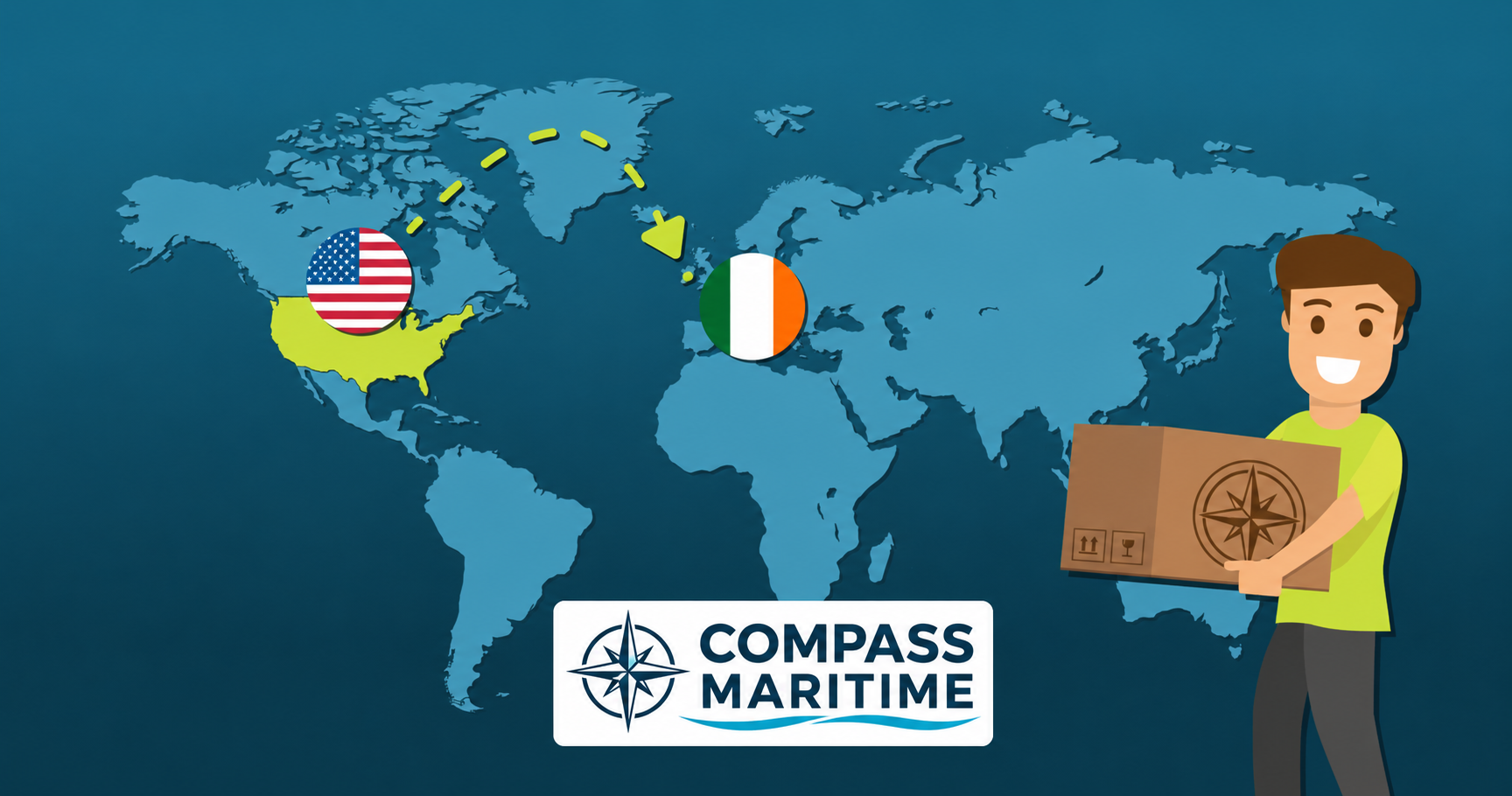
If you’ve ever tried to move something across the Atlantic — a few boxes for a relative, a piece of furniture that means too much to leave behind, or a full household on the way to a new life in Ireland — you’ve probably discovered pretty quickly that shipping to Ireland from the USA isn’t quite as simple as printing a label and dropping it at the post office.
There’s more to think about than most people expect: how the item will travel, how long it will take, what it will cost, and what happens once it lands on Irish soil. None of it is complicated once you understand the basics, but it helps to know what you’re actually dealing with before you commit to anything.
Start With the Big Question: Sea or Air?
Almost everything about shipping to Ireland from the USA comes down to this one decision.
Air freight is fast—often just a few days door-to-door—but it comes at a real cost, especially for anything heavy or bulky. It makes sense for smaller, urgent, or high-value shipments where time matters more than money.
Sea freight, on the other hand, is the go-to option for anything larger: furniture, vehicles, full household moves, or business cargo. It’s significantly cheaper per kilogram, but it trades speed for cost. A shipment crossing the Atlantic by sea typically takes one to three weeks, depending on the route, the shipping line, and which US and Irish ports are involved.
For most personal shipments — especially bulky items like furniture, boxes, or a car — sea freight is the more practical choice.
How Long Does It Actually Take?
There’s no single answer here, because it depends on a few moving parts:
- Port-to-port transit time: Typically 7–14 days for the ocean crossing itself, depending on the departure and arrival ports.
- Pre-shipment handling: Time to pack, document, and get the shipment to the departure port.
- Customs clearance: Usually a few days on the Irish side, assuming documentation is in order.
- Final delivery: Getting the shipment from the port to its final destination in Ireland.
All told, most sea shipments from the USA to Ireland take three to five weeks from start to finish, though this can vary based on the season, port congestion, and how quickly paperwork is processed.
What Can You Actually Ship?
The short answer: almost anything, as long as it’s properly declared and packed. Common shipments between the USA and Ireland include:
- Household goods and furniture for people relocating
- Personal effects and boxed belongings
- Vehicles, including cars and motorcycles
- Commercial cargo and business goods
- Gifts and personal parcels for family
Certain items — like specific electronics, food products, or anything requiring special permits — may need extra documentation, or customs may restrict them altogether, so it’s always worth checking before packing anything unusual.
Understanding the Paperwork
This is the part that trips people up most often. Shipping internationally means dealing with customs on both ends, and Ireland — like the rest of the EU — has specific requirements for what needs to be declared and how.
At a minimum, you’ll typically need:
- A detailed inventory or packing list
- A commercial invoice (for goods with commercial value)
- Proof of ownership for larger items like vehicles
- Any relevant permits for restricted goods
For people moving permanently to Ireland, Irish customs often grant duty exemptions for personal household goods, but the criteria can be specific, and missing paperwork commonly holds up shipments at customs.
This is exactly where working with an experienced freight forwarder makes a real difference. Companies like Compass Maritime handle this kind of documentation daily, which means fewer surprises and far less back-and-forth once your shipment reaches Irish customs.
What Does It Cost?
Cost depends heavily on volume, weight, and shipping method, but a few general patterns hold true:
- Sea freight is priced by volume (cubic meters) or by container, which makes it far more economical for large shipments.
- Air freight is priced by weight, and costs scale quickly for anything heavy.
- Consolidated shipments — where your goods share container space with other shipments — are usually cheaper than booking a full container for smaller loads.
- Door-to-door service, which includes pickup, customs handling, and final delivery, costs more than port-to-port but removes most of the logistical headache.
For anyone shipping more than a few boxes, it’s almost always worth getting a direct quote rather than relying on rough online estimates, since so much depends on the specifics of what’s being shipped.
A Few Practical Tips
- Book early, especially around peak moving seasons (summer months tend to be busiest for household relocations).
- Pack for a sea voyage, not just a delivery truck — items should be secured to handle weeks of movement, humidity, and handling.
- Get shipment insurance, particularly for high-value or sentimental items. It’s a small cost relative to the peace of mind it provides.
- Keep copies of all documentation — digital and physical — in case anything needs to be verified at customs.
The Bottom Line
Shipping to Ireland from the USA isn’t difficult, but it does require a bit of preparation. Knowing whether to choose sea or air, understanding realistic timelines, and getting the paperwork right from the start can be the difference between a smooth, predictable move and weeks of frustrating delays.
Whether you’re shipping a single box of keepsakes or moving an entire household across the Atlantic, people who do this every day handle the process best. That’s really the value a good freight partner brings — they don’t just move your goods from one side of the ocean to the other, they make sure nothing gets lost in the details along the way.