An overseas shipping container provides a secure and practical way to transport goods between countries. Whether you are relocating household belongings, importing commercial products, or exporting heavy machinery, selecting the right container can make international transportation more efficient and cost-effective.
However, shipping containers are available in different sizes and configurations. Understanding their dimensions, capacity, and intended uses helps you choose the right solution for your cargo and avoid unnecessary shipping expenses.
What Is an Overseas Shipping Container?
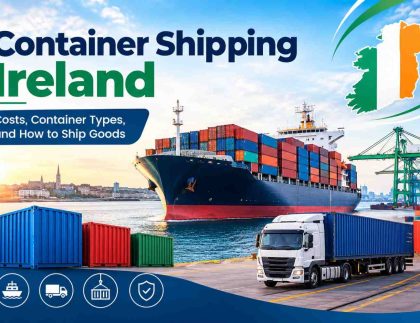
An overseas shipping container is a standardized, durable metal container designed to transport goods across international borders by sea, road, and rail. These containers protect cargo during handling, storage, and long-distance transportation.
They are commonly used for:
- International import and export shipments.
- Household furniture and personal belongings.
- Commercial products and retail inventory.
- Industrial machinery and equipment.
- Vehicles and automotive components.
Businesses and individuals can arrange international container transportation through experienced freight forwarders who coordinate cargo collection, port handling, customs clearance, and final delivery.
Common International Shipping Container Sizes
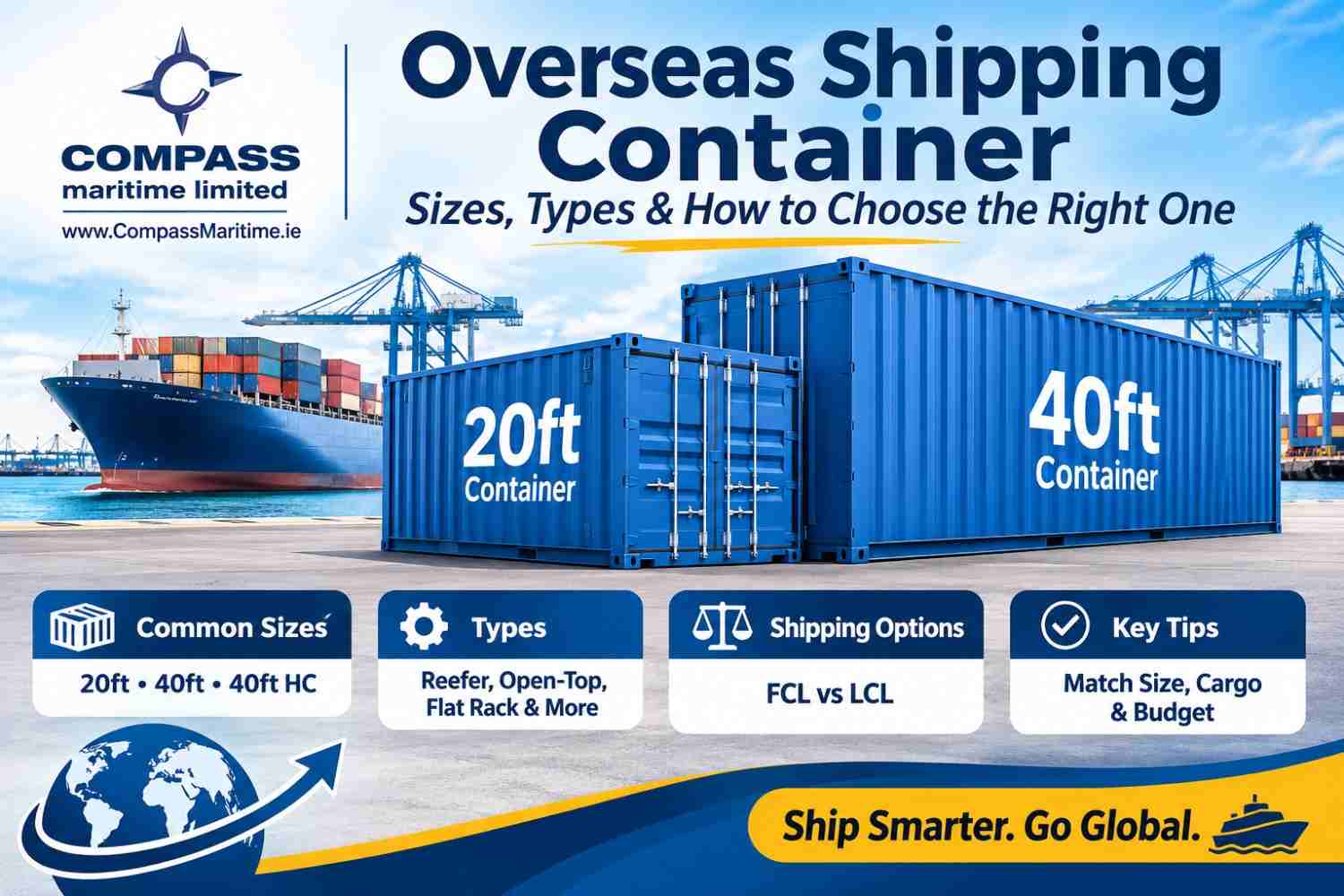
Choosing the correct overseas shipping container size depends on the volume, weight, and dimensions of your goods. The most common options are 20-foot and 40-foot containers.
1. 20-Foot Shipping Container
A 20ft shipping container suits smaller shipments that require dedicated container space. It is frequently used for household relocations, commercial goods, machinery, and equipment.
Typical specifications include:
- External length: Approximately 6.06 metres.
- External width: Approximately 2.44 metres.
- External height: Approximately 2.59 metres.
- Internal capacity: Approximately 33 cubic metres.
Actual dimensions and payload limits depend on the container manufacturer and design.
2. 40-Foot Shipping Container
A 40ft shipping container offers approximately twice the length of a standard 20-foot container. It is a popular choice for larger commercial shipments, bulk inventory, and substantial household moves.
Typical specifications include:
- External length: Approximately 12.19 metres.
- External width: Approximately 2.44 metres.
- External height: Approximately 2.59 metres.
- Internal capacity: Approximately 67 cubic metres.
This option provides additional loading space for businesses transporting larger quantities of goods internationally.
3. 40-Foot High Cube Container
A 40ft high cube container offers additional vertical space compared with a standard container. Its external height is approximately 2.90 metres.
It is particularly useful for lightweight, bulky cargo, large furniture, and goods that require additional internal clearance.
Different Types of Overseas Shipping Containers
Apart from standard container sizes, several specialized container types are available for different cargo requirements.
- Reefer Containers: Temperature-controlled units designed for perishable goods, pharmaceuticals, and temperature-sensitive products.
- Open-Top Containers: Suitable for machinery and cargo that needs to be loaded from above.
- Flat Rack Containers: Designed for oversized equipment, industrial machinery, and unusually shaped cargo.
- High Cube Containers: Provide additional vertical loading capacity for bulky shipments.
Selecting the right container type helps protect cargo and ensures transportation requirements are properly addressed.
FCL vs. LCL: Which Shipping Option Is Better?
International container shipping generally offers two main booking options.
Full Container Load (FCL): You book an entire container for your shipment. This option works well for large commercial orders, machinery, and household relocations requiring substantial space.
Less Than Container Load (LCL): Your goods share container space with cargo belonging to other customers. It is a practical option for smaller shipments when booking an entire container is unnecessary.
The best choice depends on cargo volume, destination, shipping schedule, and overall transportation costs.
How to Choose the Right Overseas Shipping Container
Before booking an international freight container, consider these important factors:
- Cargo dimensions: Measure the length, width, and height of your goods.
- Total weight: Check the container’s permitted payload capacity.
- Cargo requirements: Consider refrigeration, special handling, or additional protection.
- Shipping destination: Confirm port availability and transportation arrangements.
- Budget: Compare FCL and LCL options alongside handling, customs, and delivery charges.
For specialized or oversized shipments, professional guidance can help determine whether a standard container or alternative cargo solution is more appropriate.
Arrange Reliable Overseas Container Shipping with Compass Maritime
Choosing the right container is an important part of successful international transportation. From selecting suitable container dimensions to coordinating customs clearance and final delivery, experienced freight forwarding support can simplify the entire process.
Compass Maritime provides international container shipping solutions for businesses and individuals, handling commercial cargo, household belongings, vehicles, and industrial machinery. With an established global shipping network and extensive freight forwarding experience, the team helps coordinate shipments to destinations worldwide.
Whether you require a 20ft container, a 40ft container, or a specialized transportation solution, contact Compass Maritime to discuss your cargo requirements and request a tailored shipping quote.