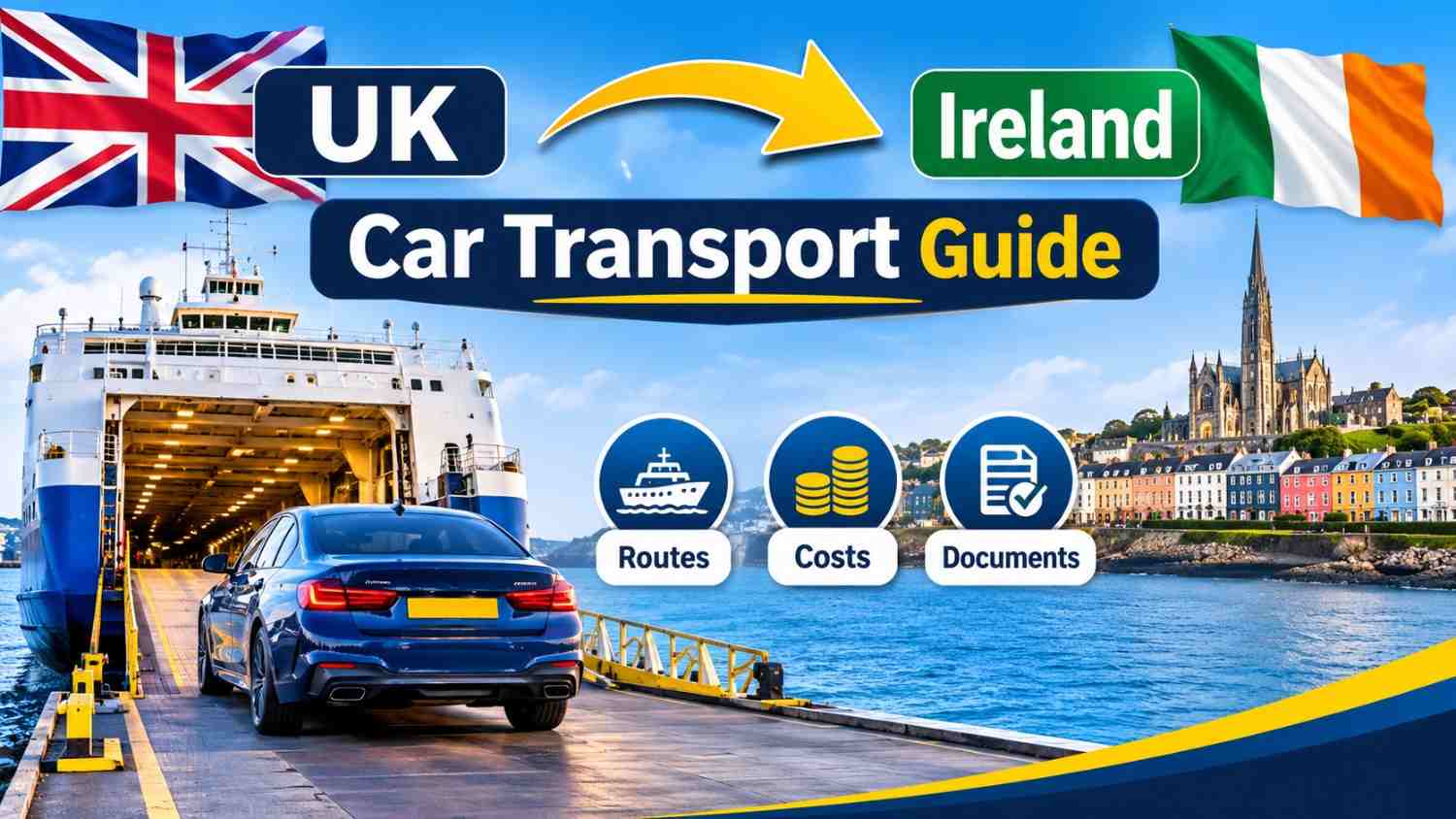
Transporting a car from the UK to Ireland involves more than booking a ferry. You also need to consider shipping costs, customs requirements, import VAT, Vehicle Registration Tax (VRT), and vehicle registration. Whether you are relocating, purchasing a vehicle, or moving a family car, understanding the process can help you avoid unexpected expenses and delays.
This guide explains how UK to Ireland car transport works, the available ferry routes, important documents, and what to expect when importing a vehicle into Ireland.
How Does Car Transport from the UK to Ireland Work?
Car transport UK to Ireland is generally arranged through roll-on/roll-off (RoRo) ferry services. You drive or transport vehicles onto a ferry and unload them at the destination port.
The process usually involves:
- Arranging vehicle collection or delivery to a UK port.
- Loading the car onto a ferry.
- Completing customs procedures where applicable.
- Arranging delivery to your Irish address.
- Completing vehicle registration and paying applicable VRT.
You can arrange the journey independently or use a professional vehicle shipping company for door-to-door transportation.
Main Ferry Routes for UK to Ireland Car Transport
Several ferry routes connect Great Britain with Ireland. The most commonly used options include:
- Holyhead to Dublin: Operated by Irish Ferries and Stena Line, with standard crossings taking approximately 3–3.5 hours.
- Fishguard to Rosslare: Operated by Stena Line, with crossings taking around 3.5 hours.
- Pembroke to Rosslare: Operated by Irish Ferries, with an approximate crossing time of four hours.
The best route depends on your collection location, delivery destination, schedule, and shipping arrangements.
How Much Does UK to Ireland Car Transport Cost?
UK to Ireland car transport costs depend on several factors, including vehicle size, collection and delivery locations, ferry charges, customs clearance, and applicable taxes.
Here are the main expenses to consider:
1. Transport and Ferry Charges
Shipping prices depend on the route, vehicle dimensions, seasonal demand, and whether you choose port-to-port or door-to-door delivery. A professional car shipping service in Ireland can help coordinate collection, ferry transportation, and final delivery.
2. Import VAT and Customs Duty
Vehicles imported from Great Britain (England, Scotland, and Wales) generally require customs declarations and are subject to 23% import VAT. Customs duty may also apply depending on the vehicle’s country of origin. Qualifying UK-origin vehicles can receive zero-duty treatment under applicable trade rules, while other vehicles may attract 10% duty.
Vehicles genuinely originating from Northern Ireland can receive different customs treatment, depending on their registration and usage history.
3. Vehicle Registration Tax (VRT)
VRT is a one-time tax payable when a vehicle is registered in Ireland for the first time. Revenue calculates it using the vehicle’s Open Market Selling Price (OMSP), CO₂ emissions, and NOx emissions.
Use Revenue’s e-VRT enquiry tool to estimate potential charges before purchasing a vehicle.
Documents Required for Shipping a Car to Ireland
Preparing the correct paperwork helps make vehicle transport UK to Ireland easier. Commonly required documents include:
- V5C vehicle registration certificate (UK logbook).
- Purchase invoice or receipt.
- Vehicle history report.
- Proof of identity.
- Transport or ferry invoice.
- Relevant insurance documentation.
- Irish VAT details for applicable business imports.
Requirements may vary depending on the vehicle’s origin and individual circumstances.
Registering Your Imported Vehicle in Ireland
Vehicles imported into Ireland generally need to be registered through the National Car Testing Service (NCTS) within 30 days of arrival.
The registration process typically includes:
- Booking a VRT appointment at an NCTS centre.
- Presenting the vehicle for inspection.
- Having Revenue calculate the applicable VRT.
- Paying the required tax.
- Receiving an Irish registration number.
- Arranging motor tax before using the vehicle on Irish roads.
Make sure you understand the registration requirements before arranging your shipment.
Why Use a Professional Vehicle Transport Company?
Hiring an experienced shipping company can simplify the entire process. Professional providers can coordinate vehicle collection, ferry bookings, port handling, delivery, and customs documentation.
Before selecting a provider, check its experience, insurance arrangements, customer feedback, and pricing transparency.
You can also read our guide on choosing an international automobile shipping company to understand what to look for when selecting a shipping partner.
For additional confidence, explore Compass Maritime’s customer testimonials to learn more about customer experiences.
Frequently Asked Questions
How long does car transport from the UK to Ireland take?
The ferry crossing typically takes 3–4 hours, depending on the route. Door-to-door transportation may take two to five working days.
Do I pay VAT when importing a car from the UK?
Generally, vehicles imported from Great Britain are subject to 23% import VAT. Northern Ireland vehicles may be treated differently depending on their history and circumstances.
Can I transport a car without travelling with it?
Yes. Professional shipping companies offer unaccompanied vehicle transportation, allowing your car to travel without you.
Arrange Your UK to Ireland Car Transport
Transporting a vehicle internationally requires careful planning, particularly when dealing with customs, taxes, and registration. An experienced logistics provider can make the process more straightforward.
Compass Maritime provides vehicle and freight shipping solutions to help customers coordinate international transportation. If you are planning to ship a vehicle from the UK to Ireland, request a quote online to discuss your transportation requirements.
Note: Customs rules, tax rates, and registration requirements can vary depending on individual circumstances. Always confirm current requirements with Irish Revenue before importing a vehicle.